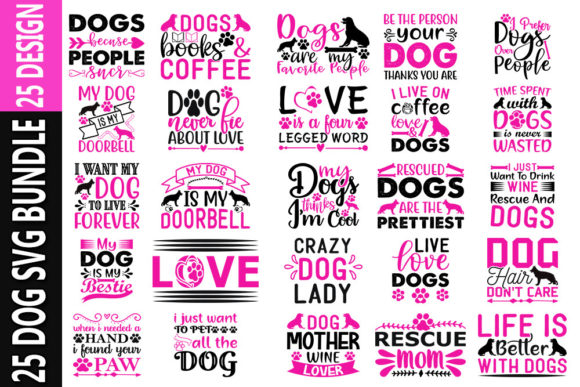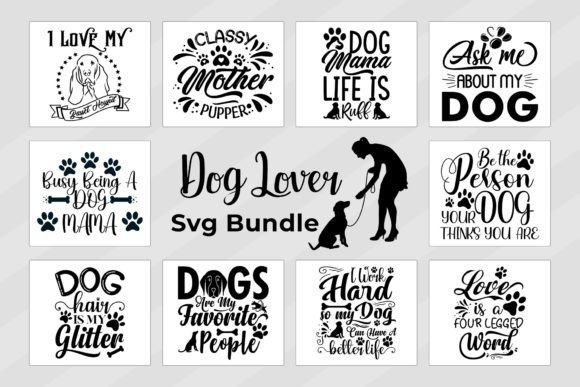
Dog Lover SVG Bundle: A Designer’s Real-World Embroidery Review
As a designer who’s stitched hundreds of custom pieces—from boutique baby onesies to Etsy best-selling tote bags—I opened the Dog Lover SVG Bundle with quiet curiosity, not hype. I wasn’t looking for “cute.” I was asking: Will this hold up under needle and thread? Will it read clearly at 3 inches wide on a textured sweatshirt? Will my customers feel seen—and delighted—when they unbox it?
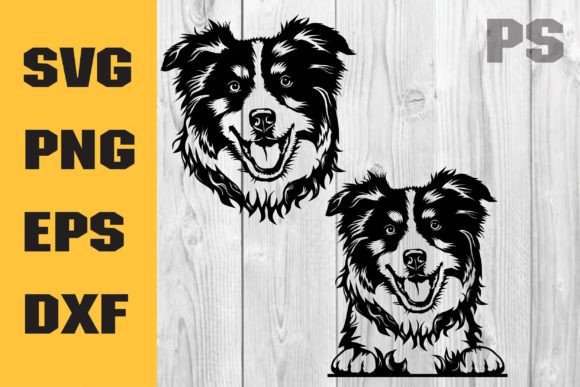
First impression? Warm, approachable, and intentionally uncluttered. The bundle leans into joyful simplicity—not photorealism, not hyper-detail, but confident line work and balanced negative space. That matters. In embroidery, breathing room isn’t decorative; it’s functional. Tight corners, overlapping paws, or tiny collars often vanish in satin stitch or blur under fill density. This design avoids those traps. Its outlines are clean, its proportions friendly, and its central motif—a stylized dog head with a heart-shaped ear or paw—carries emotional weight without visual noise.
I tested it as a custom embroidered tote bag for a local pet rescue’s fundraiser. Cotton canvas, medium-weight tear-away stabilizer, 40-weight polyester thread. The result? Crisp edges, no puckering, and a finish that looked handmade—not mass-produced. That’s rare. Many “dog lover” designs drown in embellishment: bows, bones, paw prints orbiting the main image. This one doesn’t compete with itself. It lets the subject breathe—and that translates directly to stitching reliability.
Where does the Dog Lover SVG Bundle shine brightest? On sweatshirts and structured totes, where fabric stability supports clean stitch definition. It also works beautifully on pillow covers and kitchen towels, especially when scaled between 2.5”–4”. The moderate detail level means it reads well even at smaller sizes—no squinting required. For baby embroidery, I’d pair it with soft pastel threads on organic cotton onesies; the gentle shape feels nurturing, not cartoonish. As a holiday embroidery accent on a linen tea towel or wool-blend blanket, it adds quiet charm—not clutter.
It’s also a smart fit for small shop products and Etsy sellers. Why? Because it’s versatile enough for multiple use cases (apparel, home goods, gifts) yet distinct enough to support brand consistency. Imagine using it across your shop: a small version on a patch, a centered layout on a cap, a larger iteration on an apron. The visual language holds. Customers begin to recognize your aesthetic—not just your logo, but your *tone*. And tone builds trust.
But let’s talk honestly about where to proceed with care. This is not a design for ultra-fine detail work—like 1.5” hoops or delicate silk charmeuse. The heart-shaped accent, while sweet, sits close to the edge of legibility at sub-2” scale. On stretchy fabric (think ribbed knit tees), you’ll need cut-away stabilizer and possibly reduced stitch density to prevent distortion. And on dark fabric, avoid light-colored threads unless you’ve tested for coverage—some EPS-based embroidery files don’t translate contrast perfectly without manual adjustment in your digitizing software.
For caps and curved surfaces, position matters. Center it on the front panel—not the crown—and keep it under 3.5” wide. Anything larger risks distortion around the seams. Likewise, on layered garments like hoodies, test stitch placement over the pocket seam first. That subtle curve changes how stitches lay down.
Here’s what elevates this beyond a generic machine embroidery design: its built-in flexibility for both personalized gift and commercial embroidery use. You can easily add a name or date in a complementary font without overwhelming the composition. It doesn’t scream “add text here”—it invites thoughtful customization. That’s gold for craft businesses building repeat clients.
As a digital embroidery file, its EPS origin means you’ll need to convert it properly for your machine (PES, DST, JEF, etc.). Don’t skip that step—even if your software auto-converts, always open the output file and inspect stitch paths. Look for stray running stitches, overly dense fills in small areas, or inconsistent satin stitch angles. These won’t show in the vector preview but will haunt your final finished product.
Practical notes from the hoop:
- Always test on scrap fabric first—especially with textured weaves or blends. What looks smooth on screen may snag or shift mid-stitch.
- Review stitch density before scaling up. If you enlarge beyond 120%, fill areas can become heavy and stiff. A lighter density preserves drape on apparel.
- Confirm hoop size compatibility. This design fits comfortably in a 4×4 hoop—but double-check your converted file’s actual dimensions.
- Inspect small details at 200% zoom in your embroidery software. Does the heart outline stay clean? Are interior curves smooth or jagged?
- Test black-and-white mockups to gauge contrast. If it fades on dark backgrounds, adjust thread color or add a subtle underlay.
- Use proper stabilizer—medium-weight cut-away for knits, tear-away for stable wovens. Skipping this undermines even the strongest embroidery file.
- Verify licensing before selling finished items or reselling the digital file. The listing says it’s cleared for personal and family use—but confirm commercial rights if you’re an Etsy seller or craft business planning bulk production.
The Dog Lover SVG Bundle doesn’t try to be everything. It’s not a full applique design with layered fabrics, nor is it a complex multi-color scene demanding precise thread changes. It’s focused. Thoughtful. Made for real hands, real machines, and real people who love dogs—not just as pets, but as quiet constants in daily life.
That focus is why it works so well for handmade product storytelling. When a customer sees this stitched cleanly on a linen pillow cover beside a framed photo of their own dog, it doesn’t feel like decoration—it feels like acknowledgment. And in today’s market, that kind of resonance is harder to replicate than any stitch count.
If you’re curating design assets for your shop—or simply choosing your next embroidery project—this bundle earns its place not because it’s flashy, but because it’s faithful: to craft, to clarity, and to the quiet joy of loving dogs well.